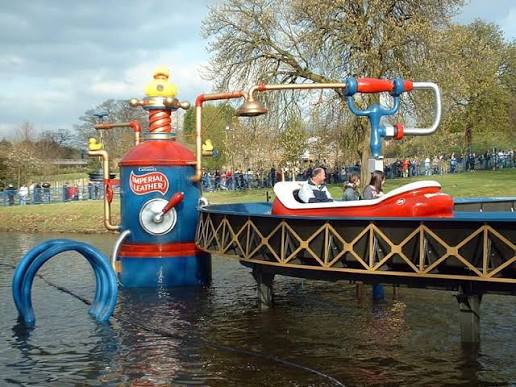
There was once a time when no British theme park line-up felt complete without a log flume.
The formula was wonderfully simple. Guests climbed into an oversized plastic log, drifted through a winding water channel, ascended one or two lift hills and then plunged into a splashdown that was almost guaranteed to soak at least one unlucky person in the boat.
They were rides that families could experience together, but they still provided enough anticipation and spectacle to become genuine park landmarks. Even people who refused to ride could gather around the final drop and wait for the wall of water.
Today, however, the traditional log flume is becoming an increasingly rare sight at UK theme parks.
Some of Britain’s most famous examples have disappeared, few large replacements have followed and new water rides increasingly look very different from the flumes many of us grew up with.
So, where have all the UK’s log flumes gone?
The disappearance of an Alton Towers institution
For an entire generation, The Flume was as much a part of Alton Towers as the Corkscrew, the Skyride and the long walk between areas.
Originally opened as the Log Flume in 1981, the ride carried guests through woodland before delivering its memorable final plunge. It was later transformed through a sponsorship agreement into The Flume: Unplugged, complete with oversized bath-time scenery and giant rubber ducks.
The theme may not have aged particularly gracefully, but the attraction remained a substantial family ride inside a park increasingly dominated by major roller coasters.
The Flume closed at the end of the 2015 season after more than three decades of operation. Its sprawling site was subsequently cleared for Wicker Man, which opened in 2018 as the park’s eighth Secret Weapon project.
Few would argue that Wicker Man was a poor use of the land. It remains one of Alton Towers’ strongest complete experiences and gave the park a heavily themed wooden roller coaster.
Nevertheless, its arrival left the resort without a traditional log flume for the first time in decades. Alton Towers still has Congo River Rapids, but the loss of The Flume removed a different kind of family attraction from its line-up.
It also demonstrated one of the biggest problems facing older water rides: they occupy an enormous amount of land that can potentially accommodate something newer, more marketable and easier to present as a headline investment.
Logger’s Leap leaves an even bigger gap
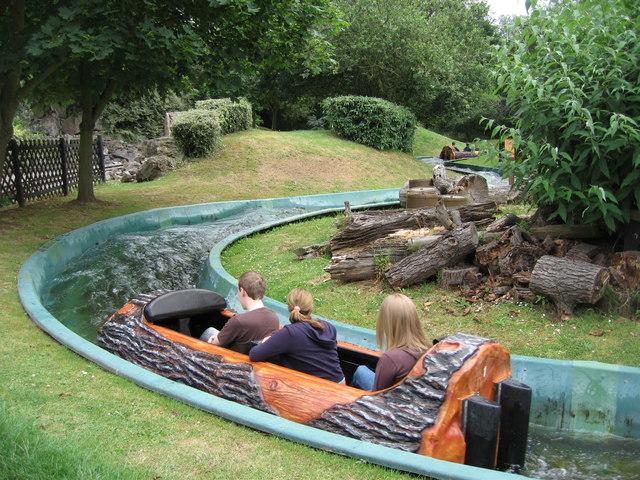
Thorpe Park’s Logger’s Leap is perhaps an even more striking example.
Opened in 1989, the Mack Rides flume became one of the park’s defining attractions. Its large final drop towered over Canada Creek, while the lengthy journey and woodland setting made it feel like a genuine adventure rather than a quick splashdown.
Logger’s Leap last operated in 2015. Although its initial absence was presented as temporary, the ride never reopened and gradually deteriorated behind fences while its future remained uncertain.
Years later, the attraction was demolished as Thorpe Park prepared the area for Hyperia. The UK’s tallest and fastest roller coaster now stands on land once occupied by Logger’s Leap and neighbouring attractions.
Once again, the replacement represents a major improvement in terms of marketability. Hyperia changed Thorpe Park’s skyline and gave the resort a record-breaking attraction capable of driving visits from across the country.
But it also reinforced a wider trend. When parks reconsider the future of an ageing flume, the value of its land can be more attractive than the prospect of refurbishing the ride itself.
Why are traditional log flumes so vulnerable?
Log flumes may look mechanically straightforward, but keeping one operational is not as simple as filling a trough with water and switching on a lift hill.
Large rides require extensive channels, pumps, filtration systems, lift mechanisms, boats, sensors and structural supports. Water must be continually moved around the course, while the trough and surrounding infrastructure are exposed to years of weather, moisture and wear.
Older rides can therefore become expensive refurbishment projects. A park may need to replace sections of trough, rebuild supports, upgrade control systems or source components for machinery installed decades earlier.
They can also be awkward attractions to operate in Britain.
A log flume may be one of the most popular rides in the park during a July heatwave, but considerably less appealing on a cold and windy morning in March. Some guests will avoid it completely unless the weather is warm, reducing its usefulness across the full operating season.
There is also the question of capacity and guest expectations. Modern visitors increasingly expect elaborate theming, storytelling, launches or unusual ride systems from major new investments. A conventional lift, drop and splash may be loved by existing fans, but it is harder to market as something genuinely new.
The classics that continue to make a splash
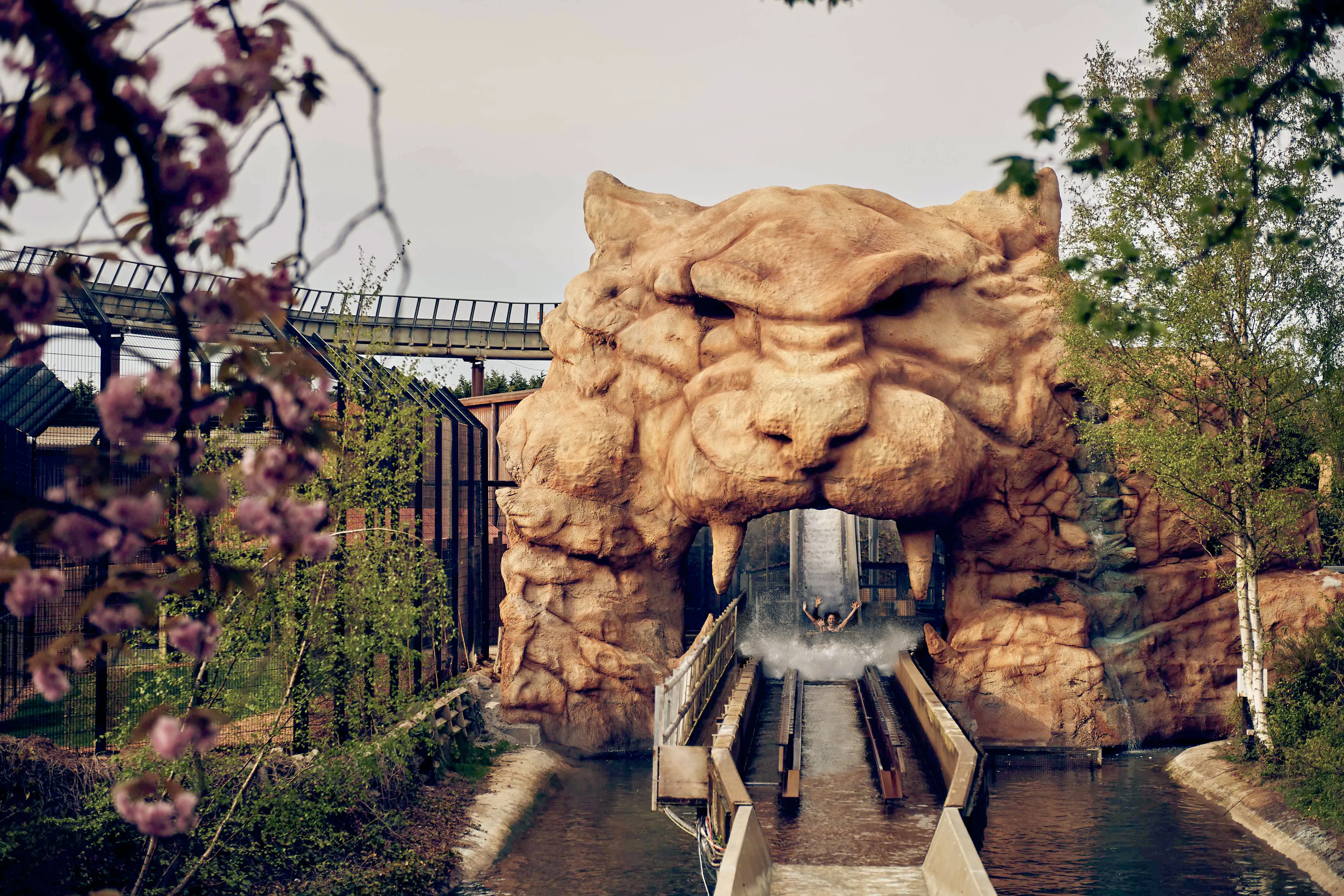
Britain has not lost every substantial water ride.
Chessington World of Adventures continues to operate Tiger Rock, originally opened as Dragon River and later known as Dragon Falls. The ride was extensively rethemed in 2018, with its final drop passing through a huge carved tiger head in the resort’s Land of the Tiger.
The investment showed one possible route for an ageing flume. Rather than removing it, Chessington incorporated the attraction into a modern themed area and gave its finale a new visual identity.
Drayton Manor’s Stormforce 10 also remains one of the country’s most ambitious water rides. Opened in 1999, it features three drops, including a backwards section, and delivers the kind of spectacular soaking that newer attractions often avoid.
Elsewhere, Pleasurewood Hills continues to operate its Water Fun Factory log flume, while smaller and travelling-style flumes can still be found at a selection of seaside and family amusement parks.
The survivors suggest that the attraction type is not inherently obsolete. A flume can still be an extremely popular family ride when it is maintained, positioned correctly and supported by the rest of the park’s line-up.
Dreamland proves the flume is not completely dead
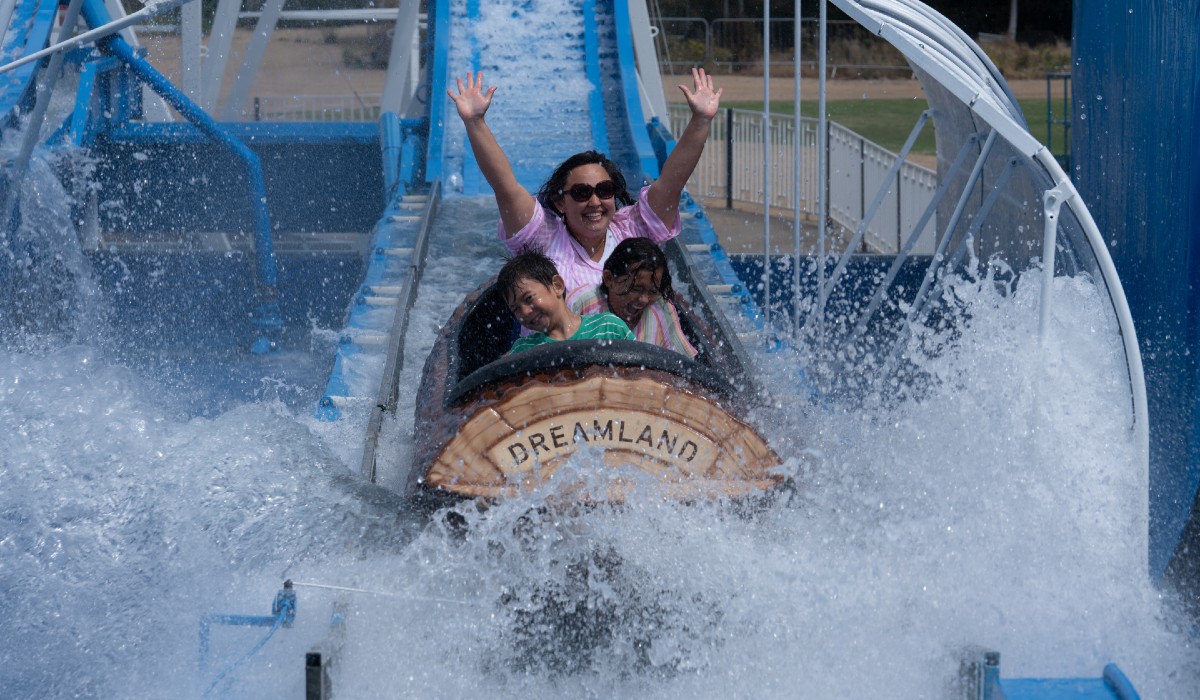
Dreamland Margate offered one of the most encouraging recent developments when it introduced Wild River in 2025.
The ride returned a log flume to Dreamland’s line-up after an absence of around a decade. Featuring two drops, including a 50-foot final plunge, it provides a straightforward and immediately understandable family attraction.
Wild River is not an enormous, permanently landscaped ride on the scale of Logger’s Leap. Its arrival is nevertheless significant because it proves that parks can still see value in the traditional format.
For a seaside attraction built around accessible family fun, a log flume makes perfect sense. It is visually engaging, easy to understand and particularly attractive during the summer season.
Paultons Park also introduced Splash Lagoon in 2024. This smaller dinosaur-themed flume is aimed at younger families rather than thrill seekers, demonstrating how the format can be adapted for a specific audience without requiring the footprint of an enormous traditional installation.
The future may belong to the water coaster
While traditional flumes have become less common, Britain may be approaching a new era of water rides.
Paultons Park has confirmed that Serpent’s Curse will open in 2027 as part of an expansion to Valgard: Realm of the Vikings.
The custom Mack Rides water coaster will combine a lift hill, fast-moving coaster sections and a large final splashdown. Paultons describes it as one of the biggest attractions in the park’s history.
Serpent’s Curse represents the sort of investment that may replace the old-fashioned flume at larger parks. It retains the anticipation, boats and splashdown of a water ride, but adds the speed and dynamic layout required to headline a major expansion.
Paultons is also preserving its smaller Seal Falls attraction by relocating and retheming it as Little Serpents. That combination is revealing: a modern water coaster for older guests and a compact flume for young children, rather than one enormous traditional ride trying to serve everybody.
Could a major traditional flume ever return?
It is difficult to imagine Alton Towers or Thorpe Park building a direct replacement for the rides they removed.
The land, construction cost and marketing potential of a new attraction will usually push a large park toward a roller coaster, immersive dark ride or more technically advanced water experience.
That does not mean Britain has finished with flumes altogether.
Dreamland’s Wild River and Paultons Park’s Splash Lagoon demonstrate that compact versions can still earn their place. Tiger Rock shows that an older attraction can survive when it is incorporated into a wider themed environment. Serpent’s Curse suggests that the fundamental appeal of racing toward a huge splashdown remains as strong as ever.
The UK’s log flumes are not all going to the same place. Some have been sacrificed for major roller coasters, some have become too expensive to retain and others have been reimagined for a new generation.
What appears to be disappearing is not the water ride itself, but the vast, meandering traditional flume that once seemed essential to every major theme park.
For those who remember rubber ducks at Alton Towers or the towering final plunge of Logger’s Leap, their absence leaves a noticeable gap. A roller coaster may provide bigger records and easier marketing, but there will always be something wonderfully timeless about climbing into a plastic log and wondering who is about to get soaked.