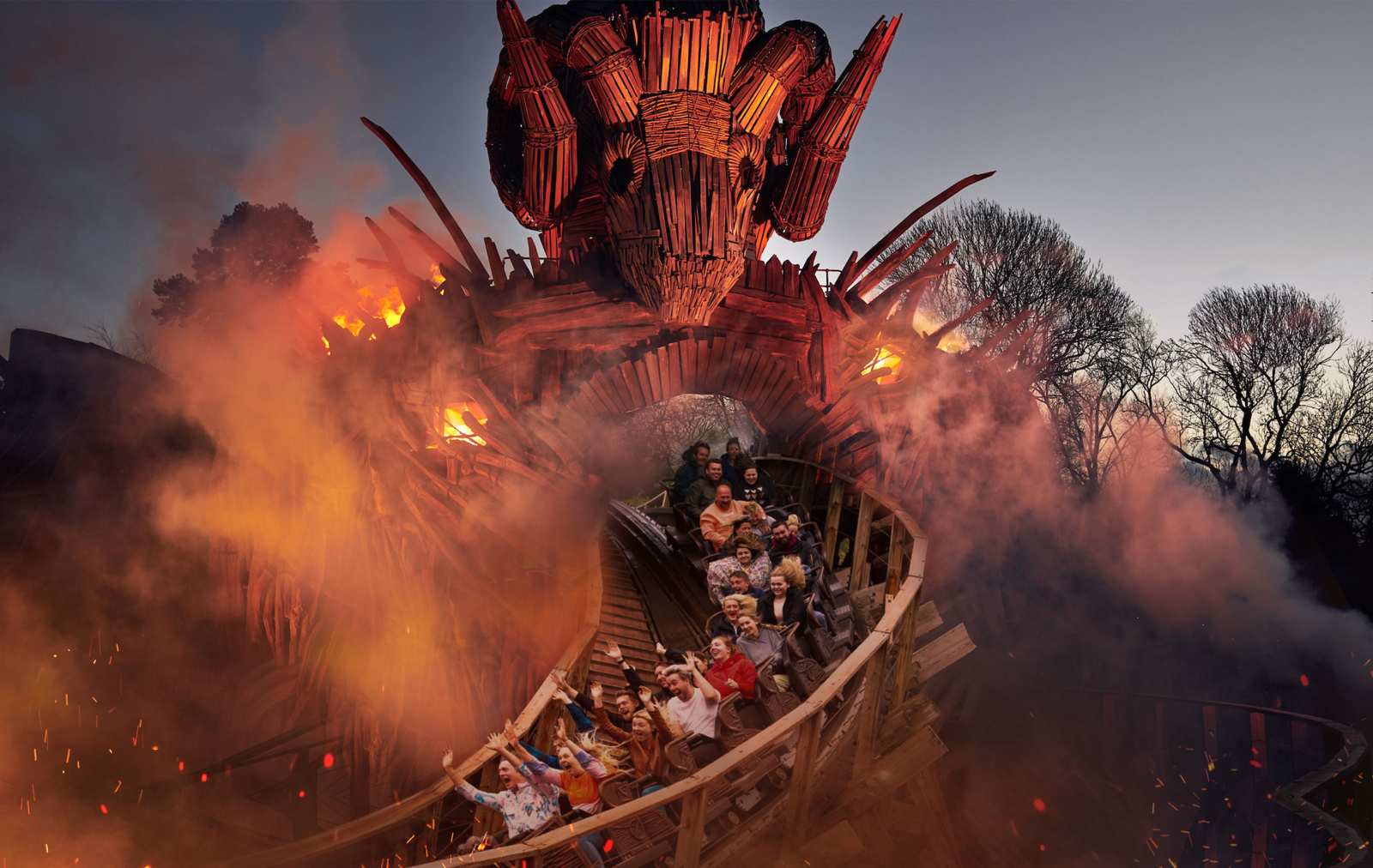
Every November, the same thing happens across much of the UK theme park industry.
The Halloween decorations come down, the biggest rollercoasters stop running and large parts of the country's major theme parks effectively disappear until spring.
There are Christmas events, hotel breaks, water parks and selected family attractions, but for anyone looking for a normal theme park day, the British season remains remarkably traditional.
Perhaps it is time to ask whether that still makes sense.
The UK attractions industry is entering one of its biggest periods of investment in decades. Universal is preparing to spend billions developing its new Bedfordshire resort, Chessington is developing a major Minecraft expansion, Paultons Park has recently delivered its largest investment to date and further significant projects are planned across the country.
With that amount of money entering the market, maybe the next evolution of the British theme park should not simply be taller coasters and bigger themed lands.
Maybe it should be a theme park that can genuinely operate throughout the year.
The British theme park season still feels surprisingly seasonal
The traditional UK theme park calendar is largely built around one assumption: visitors come between spring and autumn.
Alton Towers describes its main theme park season as running from March until November, with its biggest rides entering what the resort calls winter hibernation afterwards.
Thorpe Park goes further and simply closes its doors for winter after its main season finishes.
That model has made sense historically. Outdoor rollercoasters need maintenance, winter attendance can be unpredictable and operating a huge park on a cold Tuesday in January is unlikely to make financial sense.
But that does not necessarily mean shutting almost everything until March should remain the only option.
A 365-day theme park does not have to mean Nemesis Reborn, Hyperia or every outdoor attraction operating through snow, ice and gale-force winds.
It could instead mean building enough indoor capacity that there is still a compelling theme park product when the weather turns against the outdoor rides.
British weather makes indoor rides more valuable, not less
There is a certain irony in the fact that many UK theme parks remain heavily dependent on outdoor attractions.
Rain is hardly an unexpected event in Britain.
High winds can close tall rides. Thunderstorms affect outdoor operations. Cold temperatures can cause problems for some rollercoasters, while winter daylight hours dramatically reduce the amount of time parks can rely on outdoor environments looking their best.
Yet the biggest investments frequently continue to focus on attractions that are exposed to those conditions.
That is not an argument against outdoor rollercoasters. They remain some of the biggest reasons people visit theme parks.
But a stronger balance between indoor and outdoor attractions could make British parks considerably more resilient.
Paultons Park has already shown what an indoor investment can add
Paultons Park provides a useful recent example.
Ghostly Manor opened in 2025 as the park's first indoor dark ride following a £3.5 million investment.
Rather than relying on height, speed or outdoor spectacle, the attraction uses interactive gameplay, physical sets and digital scenes to create a family experience entirely inside.
It is exactly the type of attraction that becomes more valuable when the weather is poor.
Paultons then followed it with the £12 million Valgard: Realm of the Vikings in 2026, its biggest investment to date, including the new Drakon coaster and Vild Swing.
That combination matters.
The argument for more indoor attractions should not be interpreted as an argument against coasters. The strongest theme parks need both.
A park with major outdoor rides supported by substantial indoor experiences has far more flexibility than one where nearly every headline attraction relies on favourable weather.
Chessington's Minecraft coaster could point towards the future
Chessington World of Adventures may be about to provide an even clearer example.
The £50 million Minecraft World opens in 2027 and will include Escape the Nether, the world's first Minecraft rollercoaster.
Chessington has revealed that riders will begin the attraction on a high-speed indoor adventure through dark mines before bursting through a Nether portal into the outdoor Overworld.
That hybrid approach is particularly interesting.
Rather than treating indoor rides and outdoor coasters as completely separate categories, future UK attractions can combine both.
Indoor sections provide controlled environments, storytelling and protection from the weather, while outdoor sections retain the scale and spectacle people expect from a rollercoaster.
The investment also extends beyond the ride itself. Minecraft World will be accompanied by themed dining, retail, interactive areas and the world's first Minecraft-themed hotel.
That is closer to a destination model where the resort remains useful beyond a single sunny theme park day.
LEGOLAND already demonstrates the importance of weather-proof capacity
LEGOLAND Windsor is still predominantly an outdoor theme park, but its attraction mix already shows how useful indoor capacity can be.
Its indoor line-up includes LEGO NINJAGO The Ride, Laser Raiders, Haunted House Monster Party, Flight of the Sky Lion, Ferrari Build and Race and its 4D cinema.
When poor weather affects outdoor attractions, those rides give guests somewhere else to go.
That does not eliminate the impact of rain or high winds, but it means an entire day is less dependent on outdoor operations.
Scale that idea up across a larger park and the concept of a meaningful winter season becomes much easier to imagine.
Universal has already put 365-day opening on the table
Perhaps the clearest sign that the traditional UK theme park calendar could be about to change comes from Universal itself.
During the early development of its Bedfordshire project, Universal Destinations & Experiences said its intention was for the resort to operate 365 days a year, in line with its other major theme parks.
That matters because Universal is not approaching Bedford as a traditional seasonal amusement park.
It is developing a destination resort expected to attract millions of visitors annually, supported by hotel accommodation, dining, entertainment and major transport infrastructure.
Universal's current plans include a world-class theme park with several themed lands, visitor accommodation and a retail, dining and entertainment complex, with the resort planned to open in 2031.
A year-round operating model would inevitably place greater importance on attractions and environments capable of dealing with British weather.
That could mean indoor rides, enclosed queues, covered areas, weather-resistant entertainment and a flexible attraction line-up that changes according to the season.
Importantly, 365-day opening does not automatically mean every rollercoaster would operate every day of the year.
Universal has not revealed its Bedford attraction line-up, nor has it confirmed exactly how individual rides would operate during the colder months.
But the intention to operate the wider destination year-round is significant.
Universal UK could reset expectations
The arrival of Universal could therefore change more than simply the number of theme parks in Britain.
It could change what visitors expect a British theme park to be.
International visitors booking multi-day stays are unlikely to accept the idea that most of the resort disappears for several months because it happens to be winter.
They will expect attractions, restaurants, entertainment and resort facilities to provide a worthwhile experience regardless of whether Bedfordshire happens to be cold or wet that day.
If Universal opens in 2031 with a compelling theme park experience available throughout December, January and February, existing UK operators may eventually face a very different competitive environment.
At that point, closing the majority of a major theme park for several months every year may begin to feel less like an unavoidable feature of the British climate and more like an operating choice.
The investment is already arriving
This is not an industry struggling to attract capital.
Billions of pounds of new attractions investment is planned across the UK over the coming years, with Universal alone representing one of the largest tourism investments ever made in Britain.
The government expects Universal United Kingdom Resort to support thousands of jobs and generate tens of billions of pounds in economic benefit once the development is established.
That is what makes this the right time to think differently.
If billions are about to be spent reshaping British attractions, simply repeating the same seasonal operating model with newer rides feels like a missed opportunity.
365 days does not mean every ride, every day
The biggest argument against year-round opening is obvious: maintenance still needs to happen.
Rollercoasters require inspections and refurbishment. Outdoor attractions can be unsuitable for extreme winter conditions. Staffing an entire theme park on quiet January weekdays may make little commercial sense.
None of that disappears.
But a 365-day model could be much more flexible than the phrase initially suggests.
A park could operate different attraction packages throughout the year.
Summer could remain the full theme park season.
Winter could focus on indoor rides, selected outdoor attractions, entertainment, restaurants and smaller themed areas.
Major coasters could rotate through maintenance rather than every headline attraction disappearing simultaneously.
Christmas and February half-term could then become genuine extensions of the theme park season rather than largely separate resort events.
Indoor doesn't have to mean screens
There is another important part of this debate.
Building more indoor attractions should not mean filling warehouses with screens.
The best indoor rides use physical sets, animatronics, practical effects, movement and storytelling alongside digital technology.
Dark rides, indoor coasters, trackless attractions, boat rides and interactive experiences can provide the same sense of scale and excitement as outdoor attractions while remaining far less dependent on the weather.
For British parks, that could be a particularly valuable area for investment.
Instead of asking whether the next £15 million should create another exposed outdoor coaster, perhaps part of that investment should go towards an attraction capable of carrying thousands of guests through a wet December afternoon.
It could also make expensive park tickets easier to justify
Weather resistance is not simply an operational issue.
It affects value.
Visitors paying increasingly significant amounts for tickets, hotels, parking and food are understandably frustrated when poor weather removes a large proportion of the attraction line-up.
No theme park can control the weather.
But parks can control how dependent their product is on it.
A greater number of substantial indoor attractions means fewer occasions where guests feel their expensive day has been compromised by circumstances that are entirely predictable in the British climate.
The UK does not need to copy Florida
There is sometimes a tendency to compare every British theme park development with Orlando.
That is not particularly useful.
The UK has different attendance patterns, different weather, different planning constraints and a much smaller domestic theme park market.
But that is exactly why a British version of year-round operation should develop on its own terms.
It might mean fewer rides operating in January.
It might mean shorter hours.
It might mean indoor-heavy winter programmes and outdoor-heavy summer ones.
What matters is that visiting a major UK theme park in December should eventually feel like visiting a theme park in December, not arriving at a resort where most of the theme park has been mothballed until spring.
So, is it time for 365-day UK theme parks?
Probably, yes - but not in the simplistic sense of forcing every rollercoaster to operate through every winter storm.
The more realistic goal should be 365-day theme park resorts designed around seasonal flexibility.
Outdoor coasters will always be central to the British theme park experience, but they should sit alongside enough high-quality indoor rides, entertainment and hospitality to make parks viable when the weather changes.
Ghostly Manor demonstrates what an ambitious indoor attraction can add to Paultons Park. Minecraft World will push the idea further at Chessington.
Most importantly, Universal has already said its intention is to operate its Bedford resort 365 days a year.
If one of the world's biggest theme park operators believes year-round operation can work in Bedfordshire, that should at least challenge the assumption that the British theme park season has to stop in November.
With unprecedented investment now heading into British attractions, the industry has an opportunity to design for the climate it actually operates in.
Perhaps the next great British theme park race should not be about who builds the tallest coaster.
It should be about who builds the first park we genuinely want to visit in January.