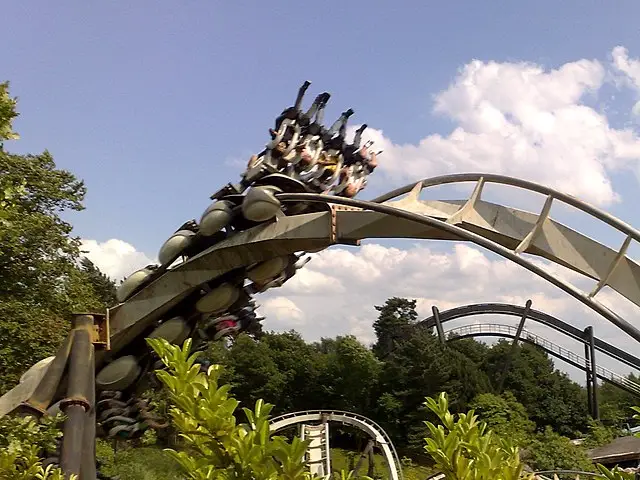
There are very few phrases in the UK theme park world that create as much instant excitement as “Secret Weapon”.
For casual visitors, it might sound like something from a spy film. For Alton Towers fans, it means something much bigger. It means rumours. Construction fences. Planning documents. Blurry photos from the Skyride. Endless forum debates. And eventually, if everything goes to plan, a major new roller coaster unlike anything the park has built before.
The Secret Weapon name has become part of Alton Towers folklore. It is not just a codename. It is a promise that something significant is coming.
Quite often, that promise has come with another powerful phrase attached: “world’s first”. From Oblivion being promoted as the world’s first vertical drop roller coaster, to Thirteen hiding its surprise drop-track moment, to The Smiler arriving with a record-breaking 14 inversions, Secret Weapon projects have often been built around one big idea fans can instantly understand.
But the story did not begin with a slick reveal, a dramatic teaser trailer or a perfectly polished marketing campaign.
It began with a problem.
Alton Towers wanted major roller coasters, but the park had one very awkward challenge: it could not simply build upwards.
Because of the resort’s setting, planning restrictions and the famous tree-line rule, Alton Towers had to become clever. Instead of dropping huge coasters onto the skyline, it had to dig down, hide rides in the landscape, use terrain, build tension and make attractions feel bigger than their physical height.
That limitation ended up shaping some of the most iconic rides in the country.
It also helped create the conditions for one of the most important creative partnerships in British theme park history, with ride designer and consultant John Wardley playing a key role in shaping what the Secret Weapon era would become.
SW1 and SW2 - The Secret Weapons That Never Happened
Before Nemesis became Nemesis, there were two earlier attempts at creating something new for what would eventually become one of the most famous coaster sites in the world.
The first Secret Weapon projects, now commonly known as SW1 and SW2, were never built. Both were linked to the idea of an Arrow Pipeline Coaster, a then-unusual ride concept where guests would travel through tight, twisting track layouts in a very different riding position to a traditional coaster.
The concept was ambitious, but it did not quite work for Alton Towers.
And honestly, that is part of why the Secret Weapon story is so fascinating. These early ideas were not failures in the usual sense. They were stepping stones. Alton Towers knew it wanted something bold, something different and something that could work within the strange constraints of the park. It just had not found the right answer yet.
John Wardley was closely associated with this early creative period, and the eventual shift away from the pipeline concept proved crucial. Had the park simply pressed ahead with the first workable idea, the entire future of Forbidden Valley could have looked very different.
What if the park had gone ahead with the pipeline coaster? Would Nemesis ever have existed? Would Forbidden Valley have become the same kind of industrial, alien landscape we know today?
Probably not.
That is what makes SW1 and SW2 so important. They are the “what if?” chapters. The strange, half-hidden beginnings of a story that would eventually change Alton Towers forever.
Then came SW3.
SW3 - Nemesis Changes Everything
If there is one ride that truly defined what a Secret Weapon could be, it is Nemesis.
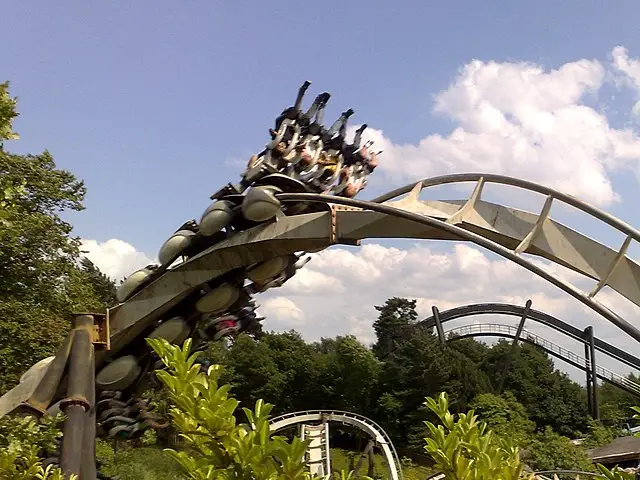
Opened in 1994, Nemesis was not just another roller coaster. It was a statement. A twisting, roaring, terrain-hugging monster carved into the ground, wrapped around rockwork, waterfalls, tunnels and a story that felt far darker and more cinematic than most UK park attractions at the time.
This is where John Wardley’s influence really becomes impossible to ignore. Nemesis was not just about putting a thrilling ride system into a pit. It was about making the whole thing feel alive. The layout, the landscaping, the viewing points, the sense of danger and the story of a creature pinned beneath the ground all worked together.
That is why Nemesis still feels so different.
The park could not build a giant coaster above the trees, so it built one into the landscape. That single creative decision helped make Nemesis feel more intense, more theatrical and more unique than a standard tall coaster ever could.
It also gave the Secret Weapon label real meaning.
After Nemesis, fans understood that “Secret Weapon” did not just mean “new ride”. It meant something ambitious. Something hidden. Something designed to make people talk.
Even today, Nemesis remains one of the most important roller coasters in UK theme park history. Its return as Nemesis Reborn only underlines how powerful that original idea still is.
SW4 - Oblivion and the Power of One Big Idea
After Nemesis, Alton Towers had a difficult job. How do you follow one of the most celebrated coasters in Europe?
The answer was Oblivion.
Opened in 1998, SW4 took a very different approach. Nemesis was chaotic, twisting and relentless. Oblivion was simpler, cleaner and arguably even more psychologically brutal.
It was built around one idea:
A Worlds First Vertical Drop.
That was it. No complicated layout. No endless series of elements. Just the slow climb, the turn, the pause, the voiceover, the hole, and that terrifying moment where the track disappears beneath you.
That simplicity is what made Oblivion so powerful. You did not need to understand coaster statistics to understand the fear. The whole ride could be explained in seconds: you are going to hang over a hole, and then you are going to fall into it.
Again, that is where the Secret Weapon formula worked so well. There was a clear concept. A world’s first style headline. A visual moment guests could talk about before they had even ridden it.
Oblivion also gave X-Sector its identity. The area became colder, darker, more controlled and more intimidating. Oblivion was not just a coaster placed into a themed area. It shaped the whole mood around it.
That is one of the things Alton Towers has historically done so well. Its biggest rides often do not just add capacity. They change the personality of the park.
SW5 - Air Takes Guests Flying
By the time SW5 arrived in 2002, expectations were already huge.
This project became Air, later renamed Galactica, and it gave guests a completely different kind of coaster experience. Instead of fear, aggression or industrial tension, Air was about flight. Smooth movement. Floating. Escaping the ground.
It was a major shift in tone.
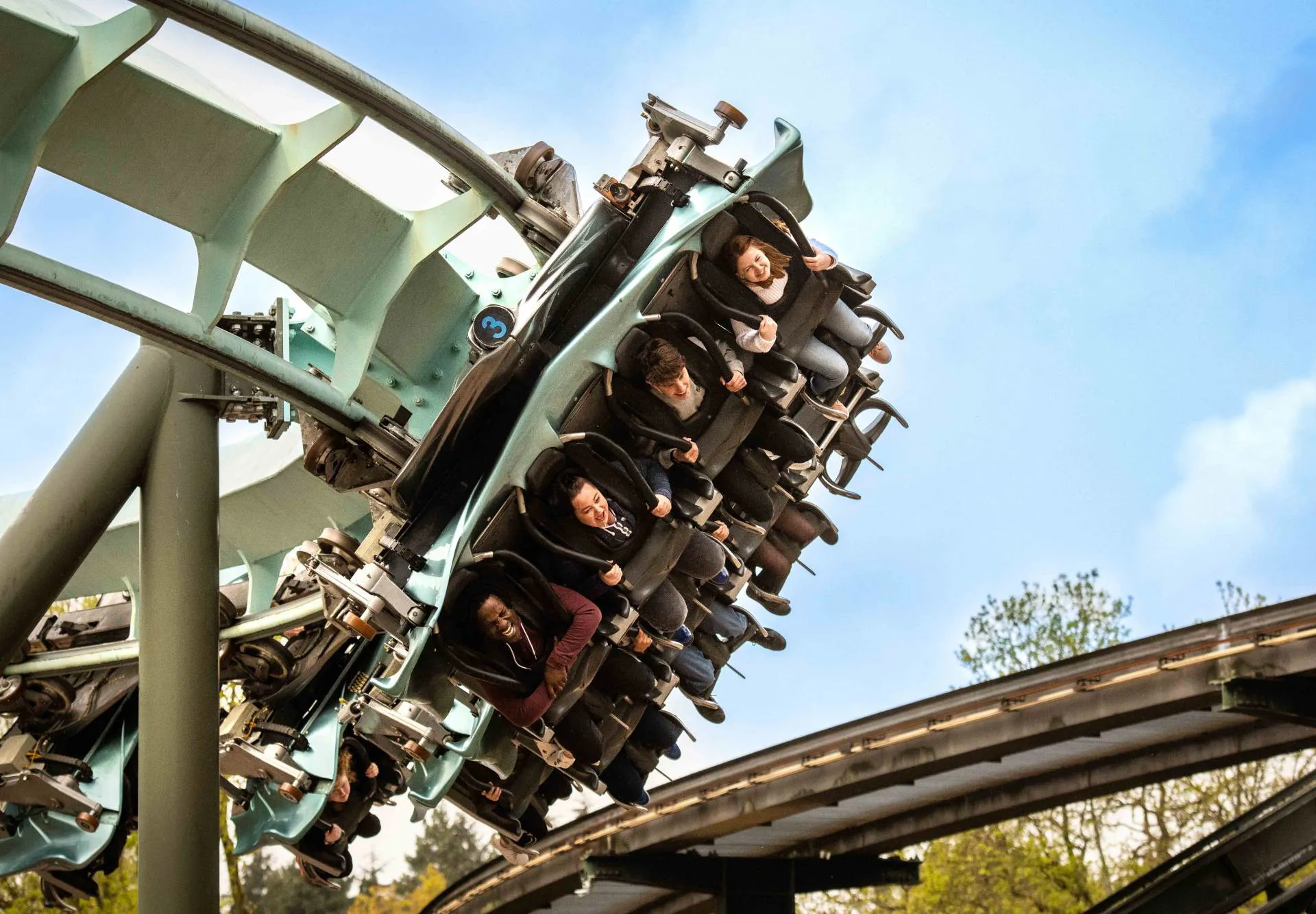
Where Nemesis felt like being dragged into a monster’s pit and Oblivion felt like being psychologically tested, Air felt calmer and more graceful. That did not make it less important. In fact, it showed that the Secret Weapon label could stretch beyond pure fear.
Air also fitted Forbidden Valley in an interesting way. It sat near Nemesis, but it offered the opposite sensation. One was violent and close to the ground. The other was open and flowing.
It was another example of Alton Towers trying to give guests a ride experience that felt unusual for the UK market. The Secret Weapon label was not just about intensity. It was about doing something guests had not experienced before, or at least not in quite that way.
Not every fan loves what happened later with the Galactica retheme, but the original ride remains a huge part of Alton Towers’ modern coaster story.
It also proved that Alton Towers was not afraid to take risks with ride systems that many guests had never experienced before.
SW6 - TH13TEEN and the Danger of Too Much Mystery
Then came SW6.
In 2010, Alton Towers opened TH13TEEN, replacing the much-loved Corkscrew site in what became Dark Forest. The ride was marketed with huge mystery. It was dark, secretive and heavily teased as something unsettling and unlike anything guests had experienced before.
And in fairness, TH13TEEN did contain a genuine surprise.
The indoor drop-track element was a brilliant piece of theatre, especially for riders who had managed to avoid spoilers. For a family-thrill coaster, it was clever, atmospheric and different.
But TH13TEEN also highlights one of the risks of the Secret Weapon programme: hype can become dangerous.
When a project is surrounded by mystery, fans start filling in the gaps themselves. Expectations grow. Rumours get bigger. By the time the ride opens, some people are no longer judging the attraction in front of them. They are judging it against the impossible version they built in their heads.
That has always made TH13TEEN a fascinating part of the Secret Weapon story.
It is not a bad ride. Far from it. But it is probably the clearest example of Alton Towers’ marketing machine creating expectations that the final attraction struggled to satisfy for some thrill-seekers.
Still, as a themed family-thrill coaster with a memorable secret, TH13TEEN absolutely belongs in the conversation.
SW7 - The Smiler Goes All In
If TH13TEEN was mysterious, SW7 was chaotic from the start.
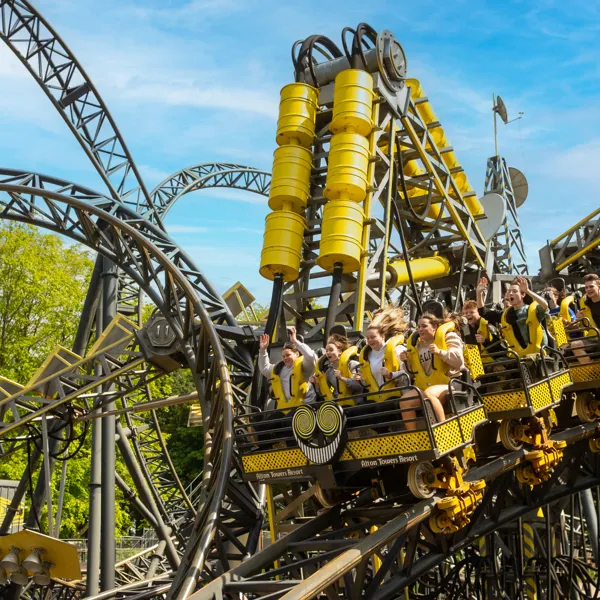
The Smiler opened in 2013 and immediately became one of the most talked-about coasters in the world. A tangled mess of track, inversions, optical illusions, correctional branding and unsettling humour, it felt like Alton Towers had taken the psychological edge of X-Sector and turned the dial all the way up.
At the heart of The Smiler was a record-breaking hook: 14 inversions.
That gave the ride an easy headline, but The Smiler’s real strength was its identity. The branding, music, marmalisation concept and visual overload made it feel completely unlike anything else at the park.
It was messy in the best possible way.
Where Oblivion was minimal and focused, The Smiler was maximalist. It threw everything at guests. The track looked impossible. The theme was bizarre. The marketing was weird. The whole thing felt slightly unhinged.
And that is exactly why people still talk about it.
The Smiler also showed that the Secret Weapon label still had huge power in the internet age. Construction updates, speculation and fan theories became part of the experience before the ride even opened. Watching the project unfold was half the fun.
SW8 - Wicker Man Brings Fire Back to the Park
When SW8 was revealed as a wooden coaster, some fans were unsure.
After all, this was Alton Towers. Home of Nemesis, Oblivion and The Smiler. Could a wooden family-thrill coaster really feel like a Secret Weapon?
Then Wicker Man opened in 2018, and the answer became much clearer.
Wicker Man was not trying to beat The Smiler on inversions or Oblivion on fear. It was trying to do something Alton Towers had not done for a long time: combine a highly rerideable coaster with a strong theatrical identity.
The result was one of the park’s most complete modern attractions.
The pre-show, the music, the giant flaming Wicker Man structure, the smell, the fire effects and the pacing all worked together. It felt like an attraction with confidence.
Wicker Man also helped prove that a Secret Weapon did not have to be the most extreme ride in the park. It had to be memorable. It had to bring something new to Alton Towers. It had to feel like an event.
On that front, SW8 did its job very well.
So What Actually Makes a Secret Weapon?
This is where things get interesting.
Fans often talk about Secret Weapons as the numbered projects: SW1 through SW8. That classic timeline usually includes the unbuilt pipeline coasters, Nemesis, Oblivion, Air, TH13TEEN, The Smiler and Wicker Man.
Another common thread is innovation. Many of the most famous Secret Weapons were marketed around a first, a record, or a ride system that felt genuinely unusual for the UK market. That does not mean every Secret Weapon has to be a world’s first, but the label has always carried an expectation that Alton Towers is trying to do something more than simply add another coaster.
There is also a creative through-line. The best Secret Weapons are not just ride hardware. They have a mood, a story, a setting and a reason to exist in that part of the park. That is where the influence of designers like John Wardley can really be felt. These attractions were not built as isolated machines. They were designed as experiences.
However, Alton Towers itself has also used the phrase more broadly in recent marketing, referring to some of its biggest thrill rides as “secret weapons”, including Rita alongside rides like Nemesis, Oblivion, Galactica, Thirteen, The Smiler and Wicker Man.
That means there are really two versions of the term.
There is the enthusiast version, which is about the numbered development codenames.
And there is the broader marketing version, which is more about Alton Towers’ major thrill coaster line-up.
Both make sense, but they are not exactly the same thing.
For fans, the numbered SW programme is the one with the mythology. It is the one that turns construction fences into clues and planning applications into detective work.
What Could SW9 Be?
Naturally, every few years, the same question returns.
Will there be an SW9?
At the time of writing, Alton Towers has not officially announced a new numbered Secret Weapon coaster project. But that has not stopped fans from speculating, especially around the long-discussed Project Horizon.
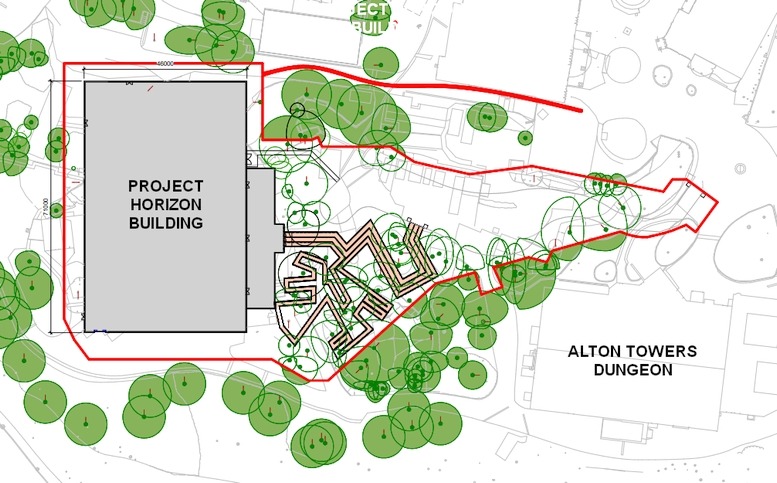
Project Horizon is the codename for a planned new indoor attraction on the former Coaster Corner site, an area tucked away near the back of the park behind the historic Towers ruins. Planning permission has been approved, but an opening date is still listed as TBC. Details about the actual ride experience remain limited, which has only added to the mystery.
For some fans, that mystery is exactly why Project Horizon feels like a possible SW9 candidate. It is secretive, ambitious, hidden indoors and tied to a site with plenty of Alton Towers history. On paper, that sounds very Secret Weapon.
But there is an important caveat: Alton Towers has not officially confirmed Project Horizon as SW9, or even confirmed exactly what the final attraction will be. So for now, it sits in that strange and very familiar Alton Towers space between planning documents, fan theories and quiet anticipation.
If SW9 does eventually happen, many fans will naturally expect some kind of headline-grabbing hook. That does not have to mean a world’s first, but given the history of Oblivion, Thirteen and The Smiler, it would be no surprise if Alton Towers tried to attach the project to a first, a record or a ride experience that feels genuinely new to the UK market.
And honestly, that is part of the fun.
Would SW9 be a new thrill coaster? A dark ride hybrid? A major family-thrill experience? Something in Forbidden Valley, X-Sector, Dark Forest, Coaster Corner, or somewhere completely unexpected?
Nobody knows yet.
But whenever Alton Towers does eventually begin teasing its next major Secret Weapon-style project, the same thing will happen. Fans will start watching. Planning documents will be studied. Construction walls will be photographed. Every clue will be pulled apart.
Because after all these years, the Secret Weapon idea still works.
It still makes people care before the ride even exists.